Meeting the Mediators of life 

I am not sure if it is the soft, toasted, earthy smell wrapping me into another world. Or is it the crumbly texture of this dark brown mass, held together by finely spun nets of roots and aggregates clinging to each other becoming one big brown blob? Or maybe it’s the surprise effect, never knowing which of the myriads of creatures living in the dark you will encounter? Maybe it is this sensory immersion reconnecting me with a world usually stepped over without noticing. I cannot help it but when kneeing over an excavated soil pit screening for everything crawling and moving in there, so often, some bigger questions on life and circles come up.  

Maybe this is because soils are this incredible platform for life transformation. The creatures in there are at the interface of death and life. They recycle the dead into the living; they bring lifelessness back to life. For example, there are fungi challenging the borders of life, feeding on rocks. And then there is death, being a commonality, nourishing life: The death of one organism means life of another, feasting on the dead. Once digested, even the excreted material keeps on feeding life, providing food for organisms along this densely, interwoven web of life. And the animals, now feeding, one day, themselves will be the fodder. There is no such thing as waste in life. In this, soils seem to be the substrate, where life’s circle and ongoing, self-accelerating processes are continuously unfolding.  

Still, soil might seem dead and passive to many. Many processes happen far away from the consciousness of the wide public. Soil’s response-ability, adapt-ability and aliveness remains obscured – and with it, its larger cycles. We forget how life is interwoven, constantly changing and evolving. Life’s recycling actors remain invisible, unknown, neglected and not valued. Neglecting their existence means neglecting the role in ecosystems they play, means neglecting the needs of these organisms. We overlook how soil animals — and the entire soil web — keep the wheel of life turning, overlook their role as mediators and buffers, translators and enhancer, and restorer and guardians of life and what their role mean to humans.  

I look down again, into the pit I’ve just opened — this living, (mostly) quiet dark world. What would this forest floor look like without them, I wonder? Without these creatures, this place would be an overwhelming mess of lifelessness. Fallen leaves, dead wood, and the bodies of once alive creatures would pile up, untransformed. It is the invisible toil of soil organisms — millipedes shredding, springtails chewing, fungi threading, and bacteria metabolizing — that keeps this surface from drowning in decay. Their hidden mouths and movements weave a relentless current of renewal. 

And their work goes beyond recycling. The tunnels they dig, the pores they leave behind — all of them shape how water moves. During heavy rains, living soils act like sponges. The water doesn’t rush off, wild and destructive, but filters into the fine lattice of life. The difference between soils that pulse with life and those flattened by compaction or sealed by concrete is a question of (human) life and dead: Without this living architecture underground, the rain becomes a force of chaos — carving gullies, washing away fields, swelling rivers into disaster. 

And their buffering goes deeper. Down here, microbes transform falling leaves into stable carbon. Their metabolic pathways are microscopic but mighty: locking away carbon for decades, regulating climate from below. Others form webs of mycorrhizae, weaving threads between tree roots, ferrying water and nutrients, passing along chemical warnings. Like the gut microbiome in our bodies, the soil microbiome builds resilience from the inside out. It teaches plants how to survive and how to thrive. 

I kneel again, this time in a field — not in a forest, but on farmland. The soil is almost black, light and loose, moist, almost springy, its smell grounding. As I lift a handful, the texture tells me: this soil is alive. Tiny tunnels crisscross the profile. Springtails dart. Worms leave glistening traces. Here, compost and cover crops have fed the underground web that in return is feeding the plants which are feeding the aboveground web. On farms like this, soil life is not a background feature. It is a system’s backbone. Manure and organic matter are not waste — they are raw material, broken down by fungi and bacteria into stable carbon, into nutrients that plants can reach. A complex community of microbes competes with and suppresses pathogens from animal waste, reducing the risk of disease spreading from soil to crop to animal. These organisms respond through processes of transformation. 

This living matrix does more than recycle — it improves. Water enters more easily, it stays longer, held in organic matter, available when plants need it. Root systems grow deeper. Crops draw more nutrients. Leaves and fruits are richer in minerals, are fuller in flavor. As water percolates through the profile, microbial communities filter it, breaking down pollutants, slowly recharging the groundwater. The field is quietly filtering, storing, and cycling — even purifying. 

And yet, just a few kilometers away, the contrast is sharp. On a field farmed intensively with heavy machinery, synthetic fertilisers, and pesticides, the soil is compacted, the surface sealed and hard. In this bare maizefield, the soil in my hands is heavy, dry, pressed together, leaving no room for much life. There are few pores and barely any movement, no earthy smell. It feels as if the ground had forgotten how to breathe and turned sterile. Without organic matter as a fodder for soil organisms, the processes I saw before don’t happen — or happen too slowly to matter. When pores are no longer due to the tons of machines passing ahead, rain rushes off rather than sinking in. Nutrients leach away. Crops become more dependent on external inputs. Pesticides meant to target one pest ripple through the system, wiping out beneficial insects and soil organisms along with them. When soils are treated as lifeless substrates, when diversity is stripped away and only yield is measured, the web below begins to fray. Soil is no longer buffering or healing. It becomes a surface, forgets being a system. 

We see the damage aboveground — floods, erosion, declining yields — but miss the slow collapse beneath. When soils are sealed under roads or cities, when meadows are turned into monocultures, we act as if there is nothing to lose. Yet we are cutting through the very bodies of those holding the system together — the worms, the beetles, the mycelium, the microbes. Each removed link weakens the whole. Living soils cushion our mistakes. But only up to a point. When the soil organisms’ needs are overheard, soil turn lifeless. While we can ignore what’s belowground, our actions will still shape the web — and the web, in turn, will shape us. Soils cushion our mistakes, but there are limits of what ecosystems can absorb. Remove one link too many, and the whole network falters. And when the web of life is too damaged, the buffering and functions of soil organism weakens — and the effects come back to us, unfiltered. It’s all connected, we are part of the cycle.  

Still, soil organisms are the ones that can initiate the reverse, the restoring. When land is damaged by fire, drought, or misuse, it is soil life that begins the healing process — mending structure, re-establishing nutrients, offering a foothold for plant life to return. Soil organisms do not only respond to change; they prepare the conditions for regeneration. But their services — cleaning, cycling, storing, protecting, guarding, renewing — happen quietly, mostly unnoticed. That is why it is time to listen to their needs. When we protect soil life, we’re not saving biodiversity, to put colourful species in a museum or zoo as a nice-to-have. We’re protecting the future woven through it. Their invisible labour keeps the ground under our feet productive and breathable. Thriving soils create thriving systems — and in the end, they allow us to thrive too. 

This is why instead of ignoring, we need to know the actors. Learn who they are. By knowing the life in the soil, we could move towards accepting the creatures living there, co-existing with them. And maybe even caring for them, thriving with them? As a scientist, I was trained to see patterns, to measure, to explain. But the longer I’ve worked with soils, the more I’ve come to understand that the most important things they teach us aren’t just biological — they’re relational. They teach reciprocity, patience, and humility. They remind me that to care for soil is to care for the possibility of a future. This is not just fieldwork. It’s kinship work. Maybe by caring for them, we’ll learn again how to care for ourselves. Soil organisms teach us that healing is communal. That care is not top-down, but circular. We need to share this knowledge in groups, we need to talk to each other, we need to reconnect, kneel down on the soil, immerse ourselves through the grass and the flowers to the substrate they are growing into the substrate of life.   

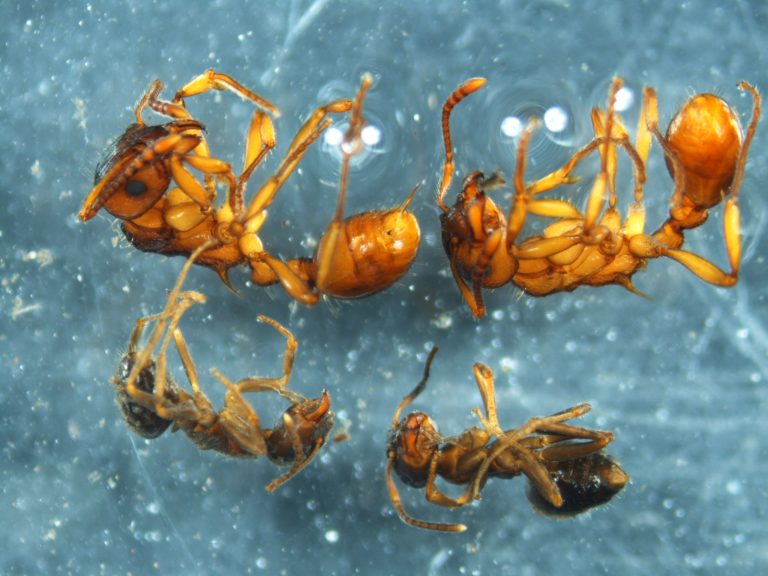
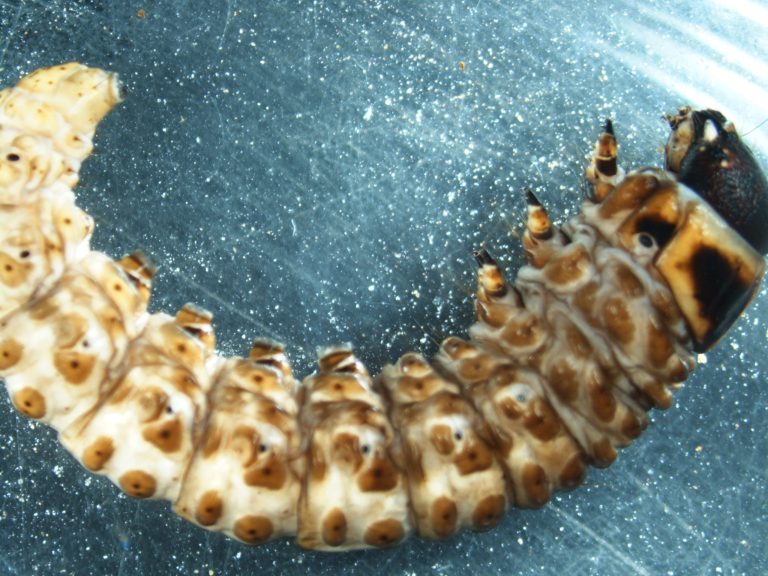
This is where the soil pit comes back, this explosion of senses that teaches so much more than any book or poster could do. How to make children curious and caring for soil organisms? Together with a local regenerative agriculture cooperative, we found that touching soils, looking for the soil organisms is a fun way to do so. This is why we went to soil safaris. Outside the classroom, underneath the school’s playground, we excavated a small hole of the soil and looked for all the life in it. Our mission: Count the numbers of different organism groups in the soil and fill a sheet. How many ants, millipedes, centipedes and insect larvae can they spot? By comparing the sheet of one site with another, they will quickly realise how diverse soil life is.  

Disgust was one of the barriers to fulfil the seemingly easy task. On the soil safaris, many children did not want to touch the soil at first because it felt dirty to them. Most of them instinctively recoiled at the sight of a worm or a slug. Some shrieked at spiders, even the tiniest ones. Where does this disgust come from? From whom did they learn it? These creatures are harmless (at least from a European perspective where there are no scorpions nor much likelihood of encountering a snake in the soil). More than that — they are enablers and guardians, vital to keeping soil fertile, plants healthy, and ecosystems resilient. There is nothing to be afraid of apart from losing the animals and life belowground. Somewhere along the way, we learned to associate soils with dirtiness. We learnt to fear and avoid the hidden crawlers. But this fear is not innate — it’s inherited. It is a symptom of disconnection. The less we see soil life, the more alien it becomes. And what is alien, is much easier to be feared. Reconnection, then, is not just ecological — it is emotional. It is learning to replace disgust with curiosity, fear with familiarity. To teach our children not just to tolerate worms and slugs, but to be fascinated by them. To show them that what lives in the soil is not dangerous — but endangered.  

After our soil safari, visiting the little critters, we close the pit again — gently — returning the soil and all its life as it was before. But maybe not everything is as it was. Maybe more has shifted than the underground world turned upside down. Now, the soil is no longer just a boring brown mass, no longer an anonymous background beneath our feet. It has become a buzzing ecosystem — intricate, alive, essential. One that shifts not only in tone and texture from beneath the old tree to the sunny patch of meadow on the other side of the path. Once seeing the hidden actors, it is hard to make them unseen again. You begin to recognize the soil not as an object, but as a community. You start to hear the quiet needs of those who live below, and understand how profoundly they shape the world above. You begin to co-exist. 

Soil life teaches us to integrate the so often neglected perspectives and creatures. It is not the big and loud ones that play the most important role. Learning about soil life is a rebellion to those normalized standards and ways of doing life of thinking in human scales only. And in this act of seeing, you rejoin the circle. Because the circle of life is not just a metaphor — it’s a material process, constantly unfolding beneath us. Soil is where life returns to begin again. Where decay becomes nourishment. Where resilience is built one invisible interaction at a time. Reconnecting with this circle doesn’t require grand gestures. It begins with humility. With curiosity. With kneeling down, digging gently, and paying attention. 

Let soil organisms teach us to listen to the (seemingly) quiet, to make us see the normally unseen, to change the scale of perception. Let them teach us that incredible life forms don’t exclusively live in distant rainforests or deep oceans, but also in the square meter beneath our toes. There is no need to travel far — the humble heroes are closer than we think. Let us reconnect with the circle of life — by kneeling down, digging into the soil, and witnessing its quiet architects at work: renewing, evolving, restoring. In meeting them, we meet ourselves as participants in a larger web — one that feeds us, shelters us, and one on which we deeply depend. Let us do more soil safaris. 

What you need for a soil safari:

  • Spate
  • Organism group list for the childred to put in the numbers of organsims they found
  • Plastic plane or some place where to put the excravated soil
  • Some curious children or any other interested people
  • Magnifying glasses for some more details

How to do a soil safari:

Excravate a 25x25cm quadrad that is 20 cm deep. Put the soil on a close plastic layer or also on asphalt or any other flat surface will do the job. Start with kneeing over the soil pit looking for animals. Put in the abundance numbers in a little list. You can do this in groups (I would recommend not more than 6 persons, otherwise it gets a bit crowded). You can also repeat in different environments like urban, grasslands, orchards, forests or vegetable gardes. Compare your results afterwards! Use magnifying glasses to look out for those tiny details. Also, for identification of an unknown organism, google lense or any other AI-based animal-recognition can help. There are also some soil life identification applications out there.

Download the material for the soil safari

Leave a Reply